Understanding Copyright and Fair Use in Video Downloading
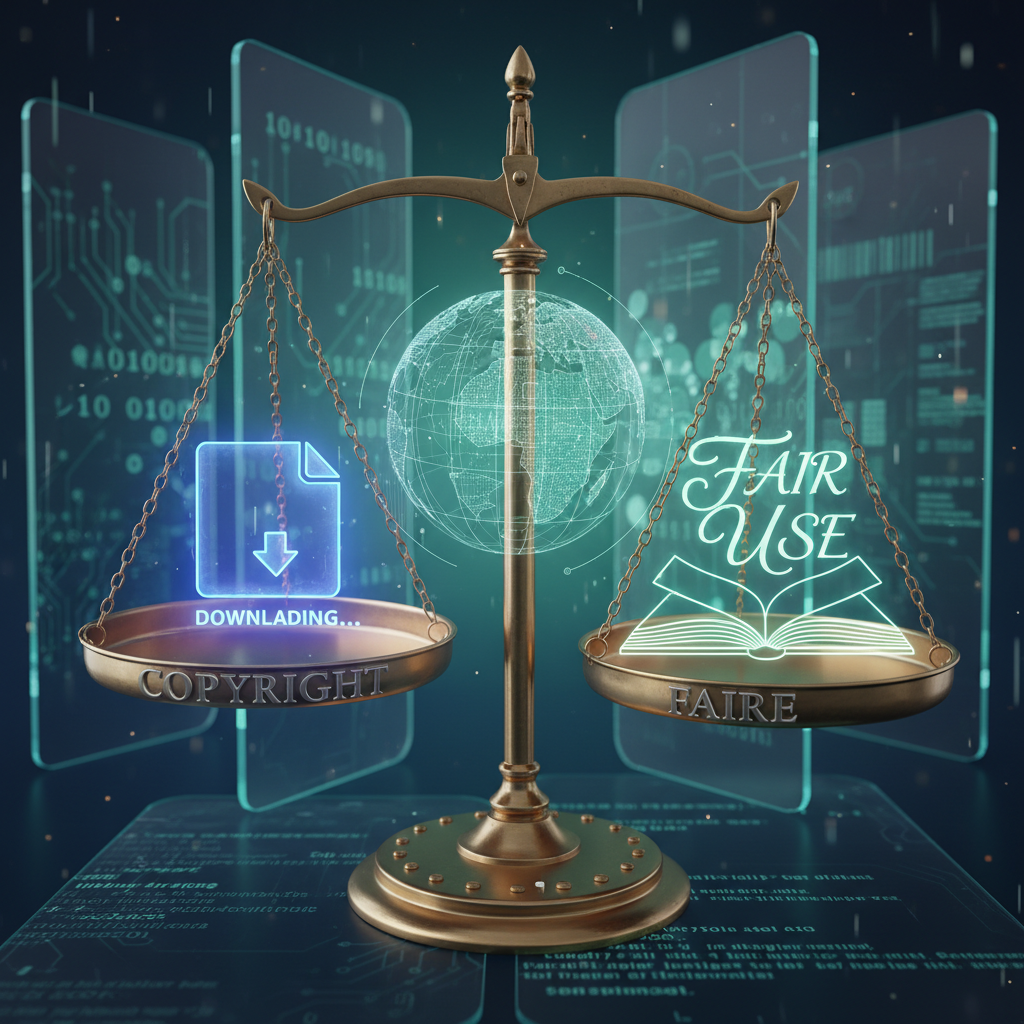
Navigate the complex legal landscape of video downloading. Learn about copyright law, Fair Use doctrine, DMCA implications, and how to stay compliant.
Table of Contents
In the digital age, accessing and downloading videos is commonplace. From educational content to entertainment, digital media is everywhere. However, behind every click and download lies a complex legal framework, particularly concerning Copyright and Fair Use. Are you sure that video you just downloaded is legal? Understanding the legal aspects of video downloading is crucial for creators and consumers alike to avoid serious legal consequences. This comprehensive guide will demystify the rules governing digital media rights, helping you navigate the fine line between legal access and intellectual property infringement, especially under the shadow of the DMCA.
The Foundation: What is Copyright Law?
Copyright law is a form of intellectual property protection granted by law to the creators of original works of authorship, such as videos, music, books, and software. This law grants the creator (or copyright holder) exclusive rights to reproduce the work, prepare derivative works, distribute copies, and perform or display the work publicly. When you download a video without authorization, you are often infringing upon one or more of these exclusive rights. The moment a video is created and fixed in a tangible medium (like a digital file), copyright protection automatically applies; no registration is strictly required, although it offers additional legal benefits.
Exclusive Rights of the Copyright Holder
- Reproduction: Making copies of the work (downloading is often considered reproduction).
- Distribution: Selling or lending copies to the public.
- Derivative Works: Creating new works based on the copyrighted material (e.g., remixes or adaptations).
- Public Performance/Display: Showing the work publicly.
Understanding these rights is the first step in appreciating the video downloading legality. If the copyright holder hasn't explicitly granted permission, downloading that video likely constitutes infringement.
Navigating the Exception: The Fair Use Doctrine
While copyright law grants broad protections, the doctrine of Fair Use provides a critical exception, allowing limited use of copyrighted material without permission for purposes such as criticism, comment, news reporting, teaching, scholarship, or research. Fair Use is perhaps the most debated and misunderstood aspect of digital media rights.
The Four Factors of Fair Use Analysis
Courts determine whether a use is 'fair' by weighing four specific factors. It's important to remember that no single factor is decisive; all four must be considered:
- Purpose and Character of the Use: Is the use commercial or non-profit educational? Courts favor uses that are 'transformative'—meaning the new work adds new expression, meaning, or message to the original. A simple download for personal viewing is rarely transformative.
- Nature of the Copyrighted Work: Is the original work factual (like a documentary) or highly creative (like a blockbuster movie)? Factual works receive less protection than highly creative works.
- Amount and Substantiality of the Portion Used: How much of the original work was used? Using a small snippet is more likely to be fair use than downloading the entire video.
- Effect of the Use Upon the Potential Market: This is often the most important factor. Does the use harm the market for the original work? If your free download replaces a paid sale, it weighs heavily against Fair Use.
Simply claiming 'personal use' does not automatically qualify a download under Fair Use. If you are downloading an entire copyrighted movie or song for free, it is highly unlikely to be protected by Fair Use, regardless of your intention.
The Digital Guardian: The DMCA and Video Downloading
The Digital Millennium Copyright Act (DMCA), enacted in 1998, significantly updated US copyright law for the digital age. The DMCA is central to the discussion of video downloading legality because it addresses technological protection measures (TPMs) and online service provider liability.
Circumvention and Anti-Circumvention Provisions
The DMCA makes it illegal to circumvent technological measures (like encryption or password protection) that control access to copyrighted works. If a video streaming service uses encryption to prevent unauthorized downloading, using a third-party tool to bypass that encryption—even if you intend to use the video under a potential Fair Use claim—is a violation of the DMCA's anti-circumvention provisions. This is a critical distinction: while the act of using the video might be Fair Use, the act of circumventing the protection is illegal under the DMCA.
Takedown Notices and Enforcement
The DMCA also established the 'notice and takedown' system. Copyright holders can quickly notify online platforms (like YouTube or ISPs) when their copyrighted material is being shared or hosted illegally. This system is the primary mechanism for enforcing intellectual property rights online and is why unauthorized copies of commercial videos often disappear quickly from public platforms.
Legitimate vs. Illegitimate Video Downloading Methods
Not all video downloading is illegal. Understanding the difference between legitimate and illegitimate methods is key to staying compliant with digital media rights.
Legitimate Downloading
- Authorized Platforms: Downloading from services like Netflix, Amazon Prime Video, or iTunes using their official apps and paid subscriptions. These downloads are typically protected by DRM (Digital Rights Management) and are licensed for temporary, offline viewing only.
- Public Domain/Creative Commons: Downloading videos where the copyright has expired or where the creator has explicitly released the work under a Creative Commons license that permits downloading and reuse.
- Explicit Permission: Downloading content where the creator has given you direct, written permission.
Illegitimate Downloading Risks
Illegitimate methods involve unauthorized access or circumvention, which carries significant risk:
- Torrenting Copyrighted Material: Using peer-to-peer networks to download copyrighted movies or TV shows is a major form of infringement and is heavily monitored.
- Ripping from Streaming Services: Using software to bypass DRM and save permanent copies of videos from paid streaming sites violates both copyright law and the DMCA.
- Downloading from Unlicensed Sites: Many websites offer free downloads of commercial content; engaging with these sites supports piracy and exposes you to legal action and malware risks.
Always prioritize sources that respect Copyright and Fair Use guidelines. When in doubt, assume the content is protected and requires a license or explicit permission for downloading.
Consequences of Copyright Infringement
Ignoring digital media rights can lead to serious legal and financial repercussions. Copyright infringement is not just a theoretical concept; it is actively enforced.
Legal and Financial Penalties
If a copyright holder sues you for unauthorized downloading, the penalties can be severe:
- Statutory Damages: Courts can award damages ranging from $750 to $30,000 per infringed work. If the infringement is deemed willful, damages can increase up to $150,000 per work.
- Injunctions: A court can order you to immediately stop downloading, sharing, or using the infringing material.
- Criminal Penalties: While less common for individual users, large-scale, commercial infringement can lead to criminal charges, fines, and even jail time.
Furthermore, your Internet Service Provider (ISP) may receive DMCA notices regarding your activity, potentially leading to warnings, throttling of your internet speed, or even termination of your service. Protecting your intellectual property rights means respecting the rights of others.
Frequently Asked Questions
<h3>Is downloading a video for personal, non-commercial use considered Fair Use?</h3><p>Generally, no. While the 'purpose' factor of Fair Use favors non-commercial use, downloading an entire copyrighted work (like a movie or TV episode) typically fails the 'market effect' factor, as it directly replaces a potential sale or rental. Courts rarely find unauthorized downloading of entire works to be fair use, especially if the content is commercially available.</p>
<h3>Does the DMCA make all video downloading illegal?</h3><p>No. The DMCA primarily targets the circumvention of technological protection measures (TPMs) and the unauthorized distribution of copyrighted material. Downloading videos from authorized, licensed platforms (like Netflix or YouTube Premium) or downloading public domain content is perfectly legal. The illegality arises when you bypass security measures or download content without permission.</p>
<h3>What is the difference between copyright infringement and piracy?</h3><p>Copyright infringement is the legal term for violating any of the exclusive rights of the copyright holder. Piracy is a common, often sensationalized, term used to describe large-scale, unauthorized reproduction and distribution of copyrighted works, usually for profit. All piracy is copyright infringement, but not all infringement (like a single unauthorized download) is necessarily categorized as piracy.</p>
<h3>Can I legally download videos using a VPN?</h3><p>A VPN (Virtual Private Network) can mask your IP address and location, increasing your privacy, but it does not grant you immunity from copyright law. If you use a VPN to download copyrighted material illegally, the act remains copyright infringement. While it may make detection harder, it does not change the legal status of the download itself.</p>
Conclusion
The landscape of video downloading legality is complex, governed by the interplay of copyright law, the Fair Use doctrine, and the stringent rules of the DMCA. While technology makes downloading easy, the legal responsibilities remain firmly with the user. To stay compliant, always seek out authorized sources, respect technological protection measures, and critically evaluate whether your intended use truly qualifies under the narrow exceptions of Copyright and Fair Use. Remember: unauthorized downloading of protected content is infringement, not a right.
Call to Action: Ensure your digital practices are legal. If you are a content creator, register your works for maximum protection. If you are a consumer, always use legitimate streaming and downloading services. Consult a legal professional specializing in digital media rights if you have specific questions about your project or usage.